WELCOME FREER’S NEWEST BOARD MEMBER..CAROLINE DAVIS 🎷❤️
Caroline Davis is an composer, saxophonist, activist and all around kick ass human being! We are lucky enough to now have her as a board member right here at FREER Records!! Learn more about her incredible life as a musician and freedom fighter…
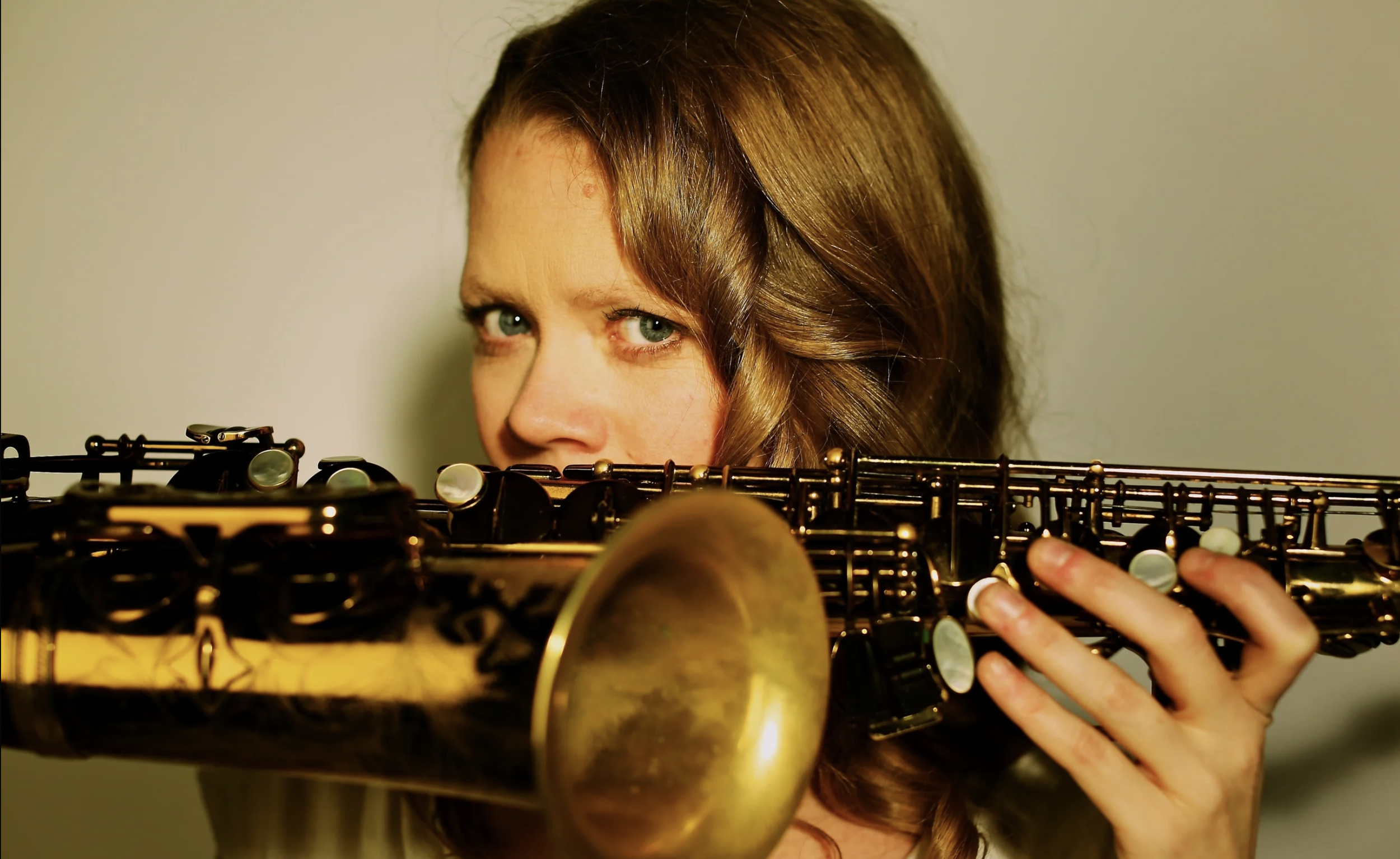
Caroline Davis & her Sax. Photo Cred: Michael Jackson
BL: I’m going to start with the first question. When did you know you were a musician? How old were you, and where are you from?
Caroline Davis: I was born in Singapore to parents who were British and Swedish. They moved there for work—my dad was an engineer and my mom was an actor. They were both born and raised in their respective countries, England and Sweden, and grew up in middle-class families.
On my dad’s side, both of my grandmothers were fleeing from war bombs in England, so that history is very present in my British family. On my mom’s side, my grandmother was a dancer during the war. She dropped out of high school and went on tour, and that’s how she met my grandfather, who was Swedish.
I’ve always loved music. I remember being really small, swimming in pools and singing underwater. That’s one of my earliest memories. My parents listened to a lot of R&B and pop, and I was really drawn to horn sections. I loved singing along with the horns. My dad did that too, and I copied him. That’s what led me to the saxophone.
I started playing later—when I was about 12—and the rest is history.
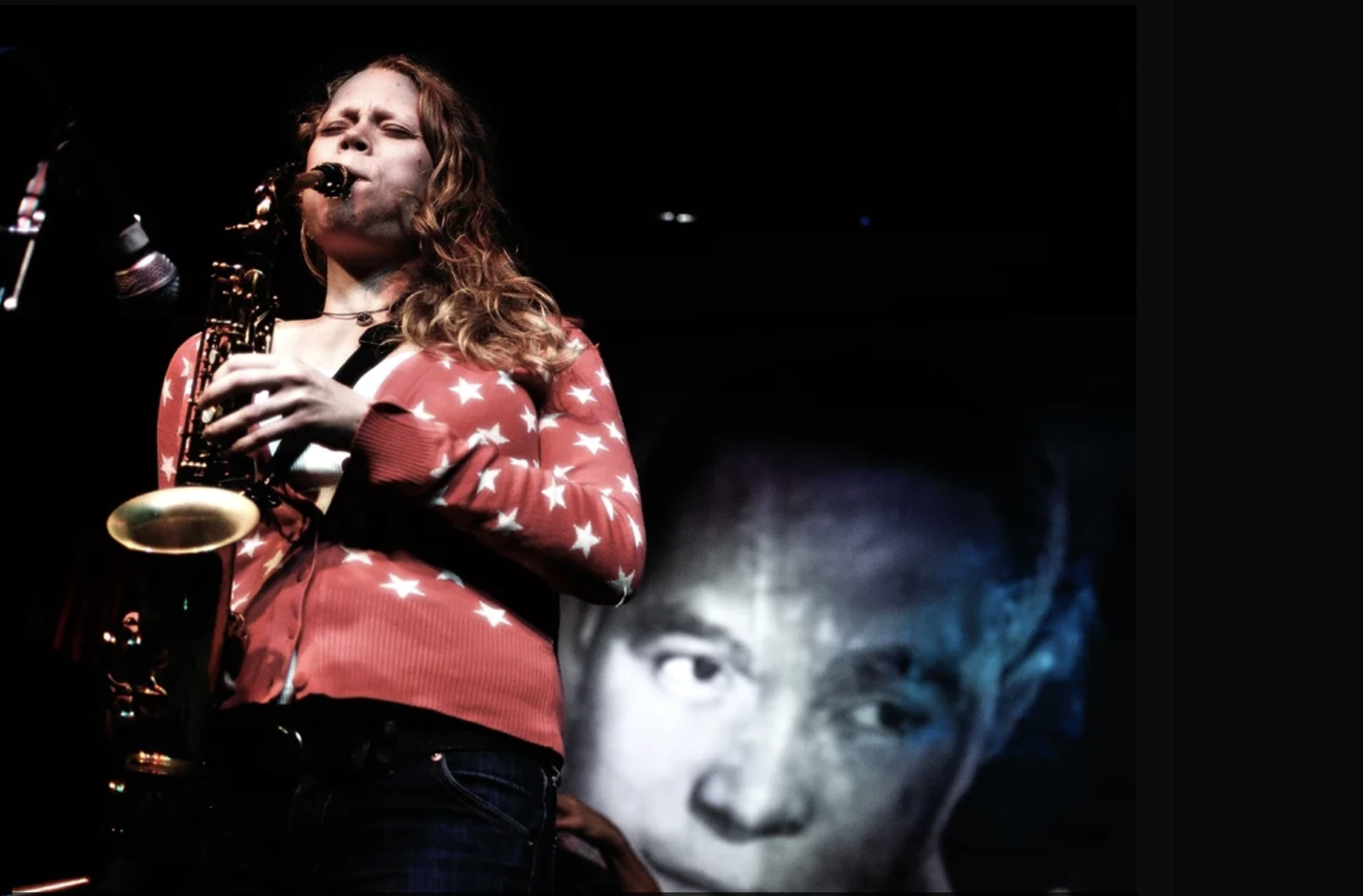
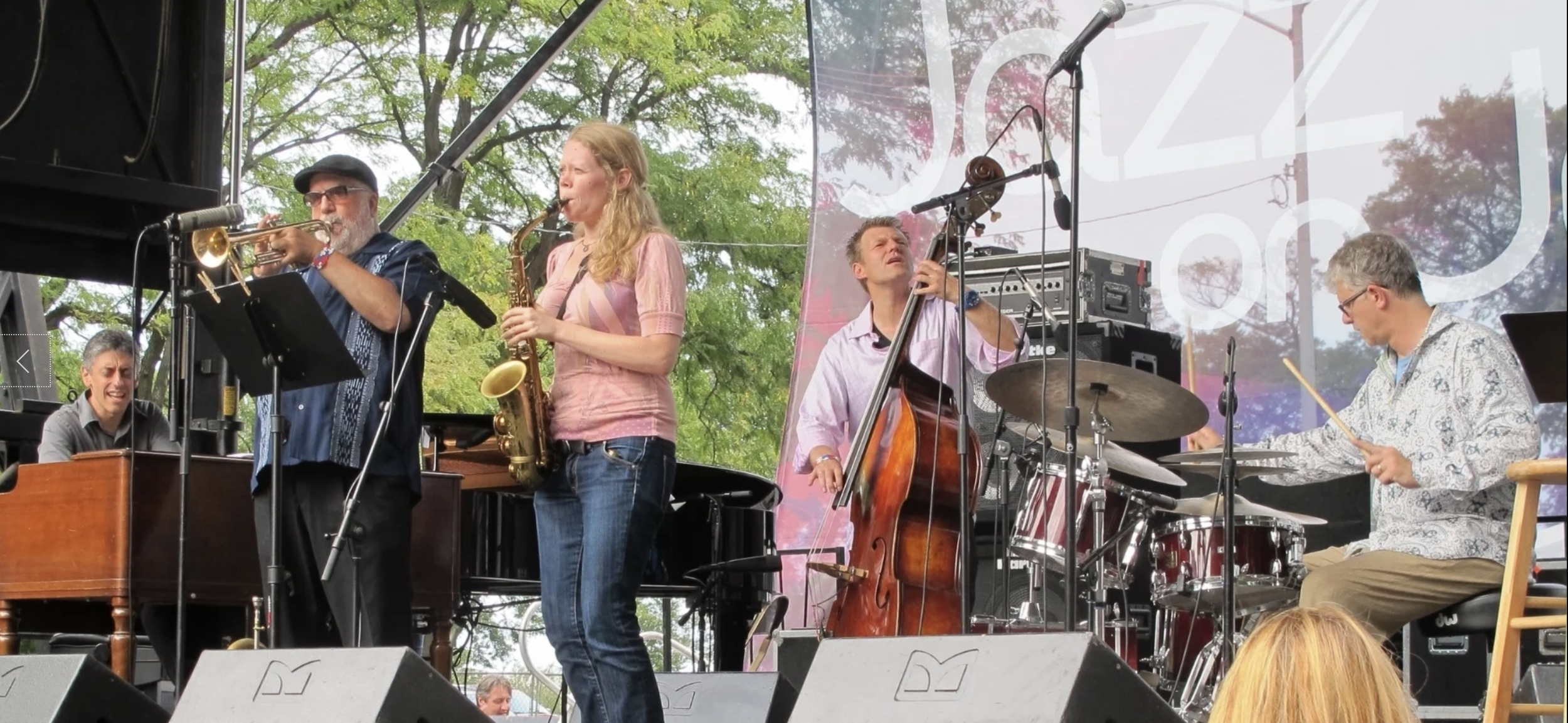
Caroline at a Jazz Showcase. Photo Cred: Ron Perillo
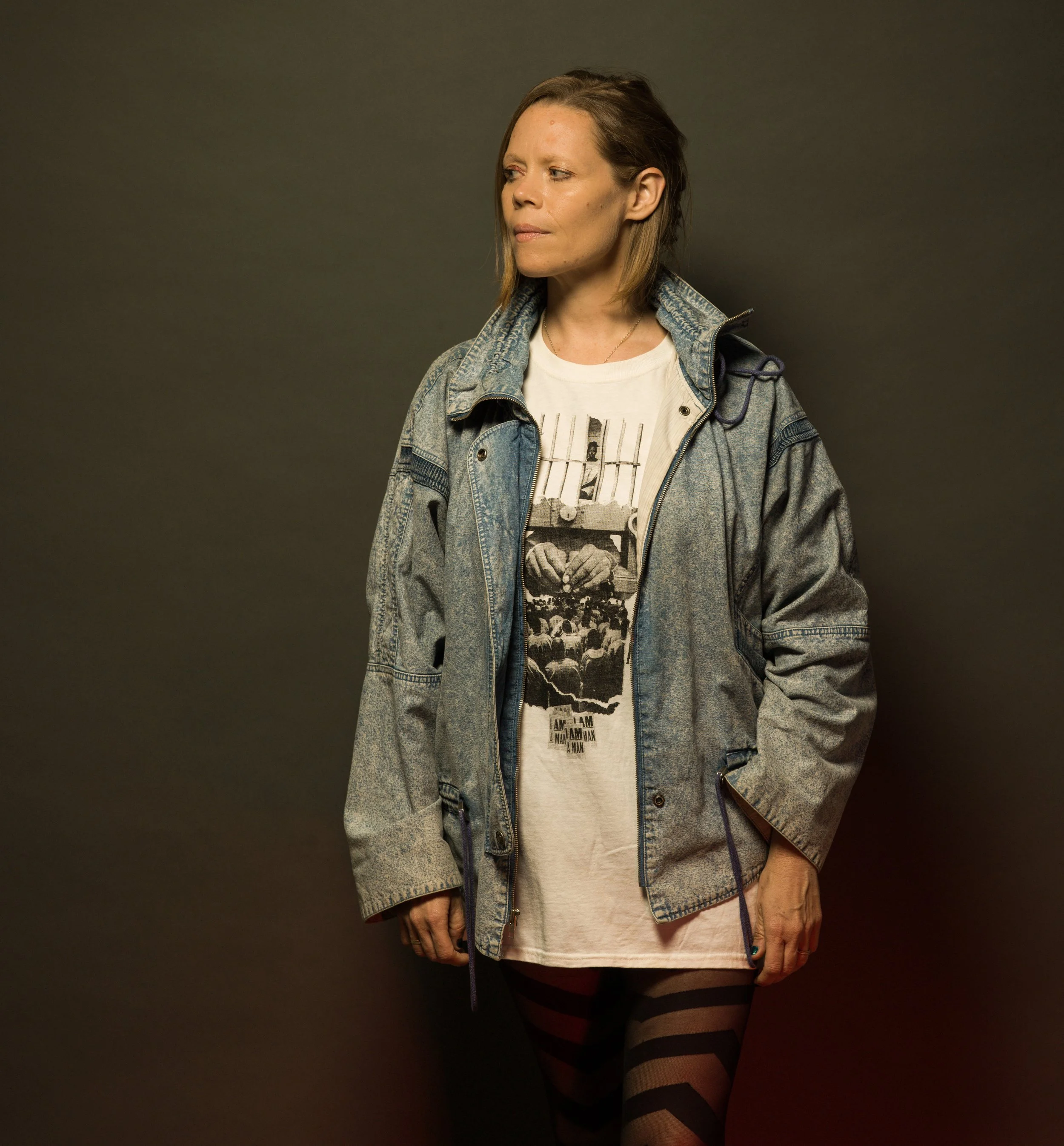
Caroline rocking her OG DJC shirt!
BL: When did you become an activist? Why are you so passionate about prison-impacted people?
Caroline Davis: My mom’s brother—my uncle—was incarcerated in Sweden. Growing up, we went in and out of prisons to visit him. Prison in Sweden is very different. It’s much more relaxed. There were moments when guards would come with him to our house—three guards, actually—and we’d all go swimming together at my aunt and uncle’s lake house.
I have photos of that from when I was around 15. I even taught my uncle how to play saxophone while guards were there. They were really kind. It was such a strange and interesting environment, knowing he would eventually go back to prison. Visiting him inside was also much gentler than anything I’ve seen in the U.S.
During the pandemic, I started realizing that my family never really talked about that part of our history. There was a lot of embarrassment. Nobody wanted to talk about it. But I always felt connected to my uncle in a special way. I understood him. He had a lot of unlucky moments—substance abuse, stealing, selling drugs—and that kept him cycling in and out of prison for over a decade.
He’s a wonderful person. It always felt like bad luck more than anything else.
During the pandemic, all these memories came back—from visiting prisons as a baby, as a little kid, as a teenager. And still nobody wanted to talk about it. So I started writing letters to people in prison here in the U.S.
That led me into a network of people connected to political prisoners. And I want to say clearly: everyone inside matters—not just political prisoners, not just people who were wrongfully convicted. Everyone matters.
The first person I wrote to was Jalil Munatim, a veteran Black Panther who was incarcerated for 48 years. He challenged me. He said, “If you care so deeply about people who are in here, what is your art saying about this part of society?”
That changed everything for me.
I shifted my band, Alula, toward social justice work. I started writing music that incorporated samples of people who were incarcerated—people still inside and people who had passed, like Sandra Bland. I even incorporated voices like Galileo’s—people punished for truth.
This started around 2019–2020.
BL: Do you have any rituals when you create?
Caroline Davis: Yes. I do a lot of breathing exercises. I work with stones—fluorite and tourmaline. I place them in front of me or on the music stand, and sometimes I bring them to shows. I believe they hold power.
I also burn incense or candles. I think about my ancestors when I make music, especially when I’m writing. I wonder what they would think about the sounds I’m creating.
BL: Any superstitions when performing?
Caroline Davis: I wouldn’t say many, but I do believe in ghosts. I believe in unexplained energies connected to certain environments. I feel those energies strongly.
For example, in my bedroom, I can feel when spirits need to move in and out, and sometimes I need to keep the door open for that. I guess that counts as a superstition.
I’m also very intuitive with people’s energy. I’m an empath.
BL: As a youth, what did creating help heal for you? Does it still help now?
Caroline Davis: When my parents divorced, my mom and I didn’t have money. We lived in Atlanta after moving to the U.S., and I went to a school where I was one of maybe ten white kids. Everyone else was Black, Mexican, or Puerto Rican.
That shaped me deeply—musically, culturally, emotionally. This was Atlanta in the late ’80s and early ’90s. Gospel and R&B were huge. I absorbed that—Mary J. Blige, SWV, Color Me Badd, Boyz II Men. Singing with friends gave me community and belonging.
Then my mom was held up at gunpoint in our neighborhood. We had to leave suddenly, toward the end of the school year. We moved to a very white part of Texas. I got bullied badly. I was chubby, dressed differently—my Atlanta friends had dressed me—and it was brutal.
Ironically, I was never bullied in Atlanta, where no one looked like me. But in Texas, where everyone did, the bullying was harsher.
Music helped me survive all of that.
Pablo Held Investigates Caroline Davis
BL: What do you hope to bring to FREER Records as a board member?
Caroline Davis: Honestly, FREER is already doing incredible work. That makes this a hard question.
I think adding people to the mix strengthens the collective—more connections, more shared consciousness, more support. I’d love to help connect FREER with musicians who want to support production with artists inside. Music is so saturated right now. It has to be so good people can’t ignore it. I want to help make that happen—artistically and structurally. Mostly, I want to strengthen community.
BL: Do you have favorite FREER songs or moments?
Caroline Davis: I love Valerie Seeley’s work—her energy, her attitude. I need to dig deeper into the catalog, but her album really moved me.
I also love Spoon Jackson. “Computer Lady” is incredible. Spoon is a good friend. I visited him at Solano, and we wrote a poem together that I hope becomes a song.
Thank you for having me. I’m excited to get to work and to see you at the board meeting soon. Peace and love.
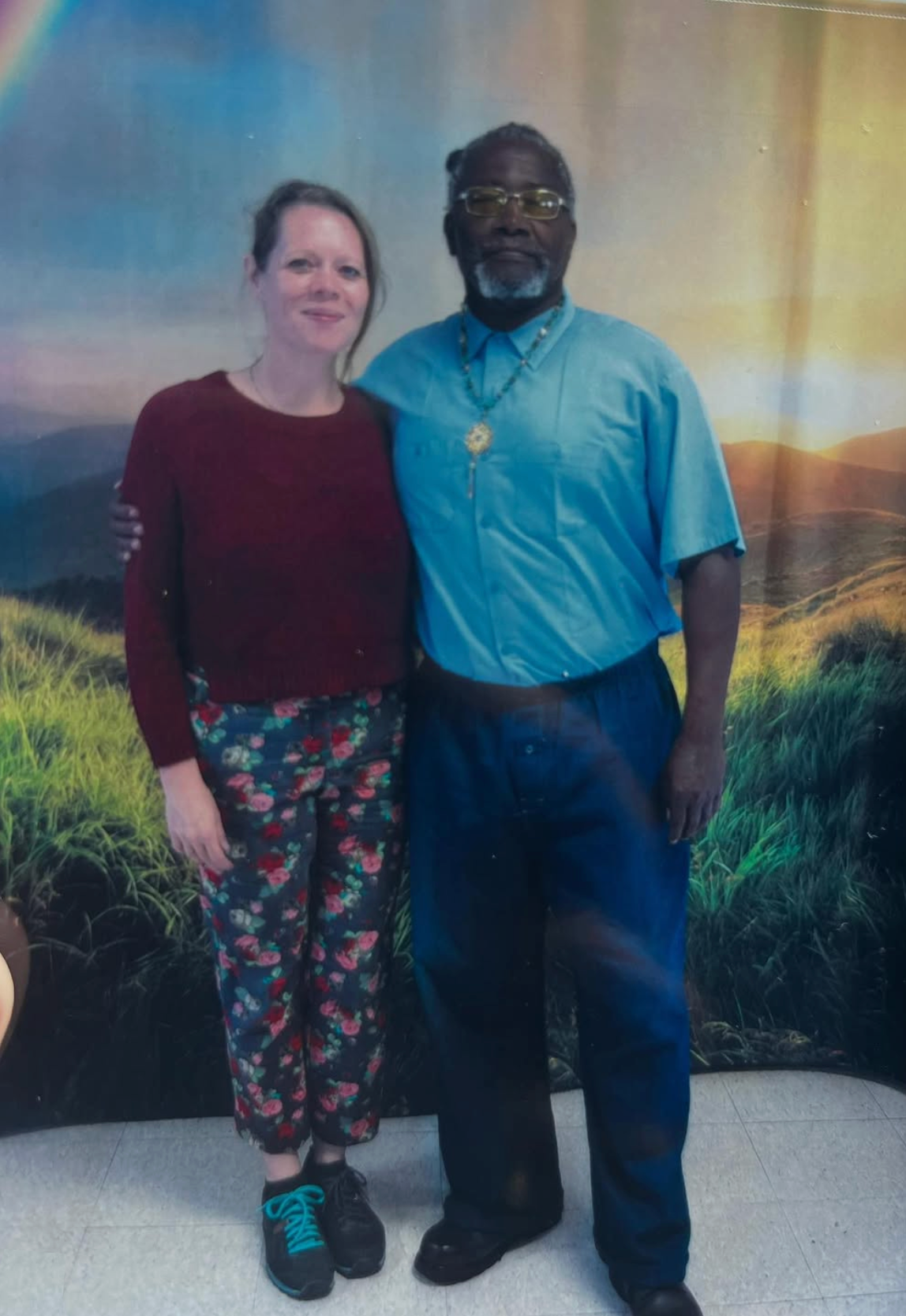
Caroline and Spoon on recent visit